


Digital Product Passports (DPPs) only deliver real value when they are scalable, reliable and connected to existing data ecosystems. At Cirmar, we help organisations create DPPs that are not standalone documents, but fully integrated data structures—built on recognised code standards such as GTIN, article codes, HS codes and more. By linking DPPs to these identifiers, companies can move from manual data handling to automated, system-driven processes. This is a crucial step in making circular strategies operational at scale.
A Digital Product Passport without a consistent identifier is difficult to maintain, exchange or scale. Code standards solve this challenge. They act as a universal key that connects products to data across systems, organisations and supply chains.
Whether you are working with GTINs for global product identification, internal article codes for ERP integration or HS codes for international trade, these identifiers allow DPPs to become part of your existing digital infrastructure—rather than an additional layer on top of it.
That makes circularity practical: when product data flows seamlessly between systems, partners and use cycle stages.

By structuring DPPs around codes, we enable automation across the entire use cycle. On the Cirmar platform, codes function as the anchor point for importing, updating and exchanging product information.
Our import features use these identifiers to automatically retrieve and match data from various sources. This eliminates repetitive manual input, reduces errors and ensures that your DPPs remain consistent and up to date.
Instead of building passports one by one, you create a system that continuously generates and enriches them.
To further strengthen this automation, our platform includes an API connection to the GS1 datapool. This allows you to directly retrieve product-related data stored within GS1—one of the most widely used global data networks.
By combining GS1 data with your own product information, you can rapidly build comprehensive and standardised DPPs. This not only improves data quality but also ensures alignment with international standards and supply cycle expectations.
The result is a future-proof approach to product transparency.
Many organisations struggle with fragmented product data spread across ERP systems, supplier databases and external platforms. Without a clear structure, creating DPPs becomes time-consuming and difficult to maintain.
By introducing code-based DPPs, we bring structure to this complexity. Data becomes easier to organise, exchange and validate—both internally and with external partners. This creates a solid foundation for circular use cases such as reuse, refurbishment, recycling and compliance reporting.

‘C_passport® is designed for scale. The platform can be connected to your existing data sources – with or without data gaps. This allows for an easy setup, and lots of possibilities to enrich data and generate insights.’
Rens van den Boorn
Circularity requires more than good intentions—it requires systems that work at scale. By connecting DPPs to widely used code standards, companies can embed circular data into their daily operations.
This approach supports:
Most importantly, it turns DPPs into a living part of your organisation, rather than a static requirement.
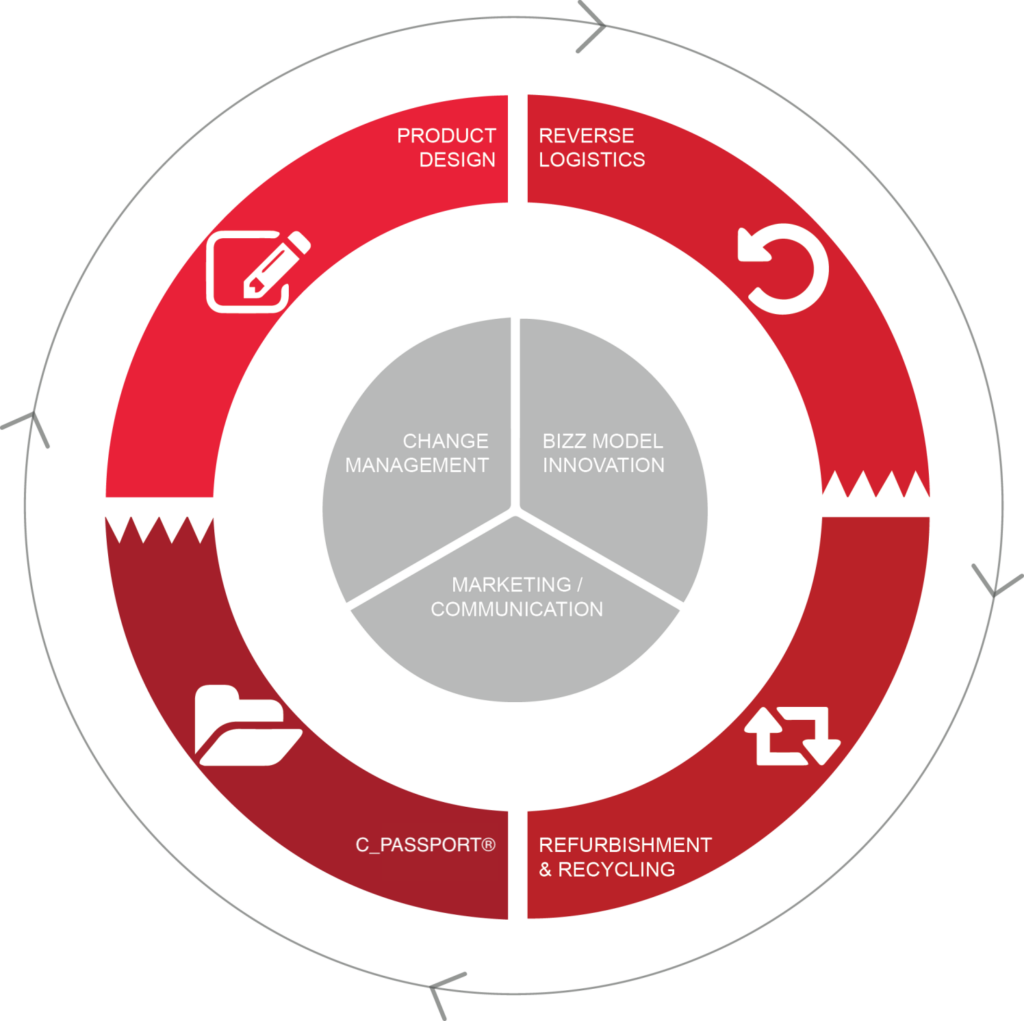
When DPPs are built on recognised codes and connected to trusted data sources, they become even more powerful tools for both compliance and value creation. They enable better decisions, unlock new circular opportunities and strengthen collaboration across the supply chain.
Cirmar supports organisations in designing and implementing these systems—ensuring that Digital Product Passports are not just created, but truly integrated and future-ready.
Our experts in DPP data landscapes are ready to transform your business.
Find out more about our circular transformations by diving into our circular stories