


How do we move from promising AI pilots to true, system-wide implementation in the process industry?
That central question guided the recent ISPT (Institute for Sustainable Process Technology) event, “AI in the Process Industry,” hosted at Wageningen University & Research. During this event, industry leaders, researchers, and innovators explored how artificial intelligence can move beyond experimentation and become an integrated driver of transformation across the entire value chain.
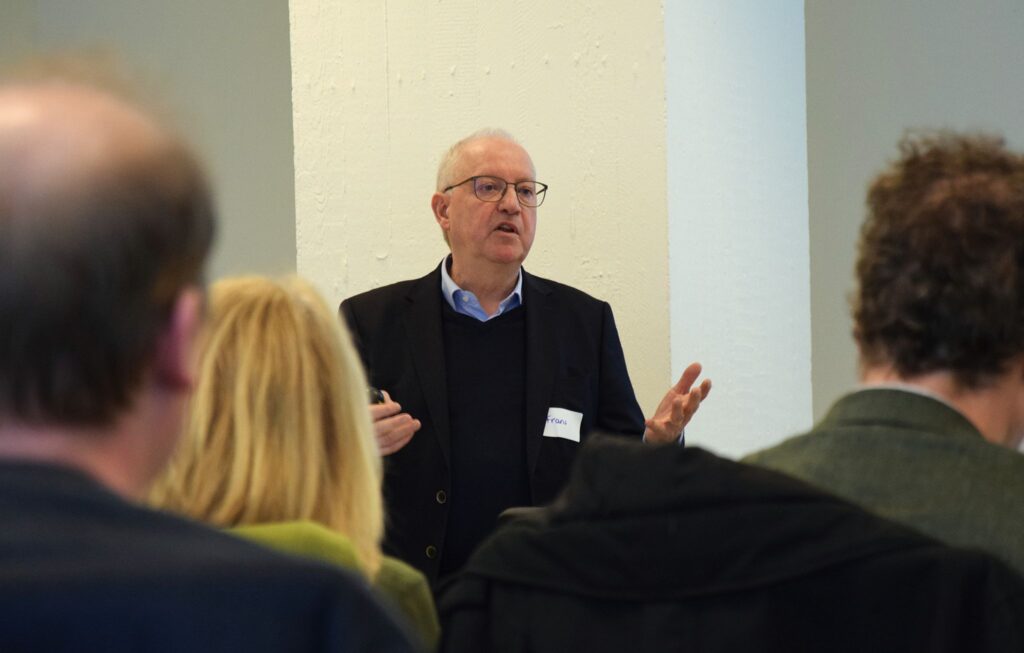
Frans Beckers represented Cirmar in the discussion, contributing to a conversation that focused not on the hype around AI—but on how to make it work in real industrial environments.
One analogy resonated strongly throughout the event: the introduction of the clap skate in speed skating.
The clap skate didn’t change the essence of the sport. It didn’t alter the rules or the athletes’ ambition. What it did was increase the efficiency of every movement. By allowing skaters to extend their stride more effectively, it unlocked speed that was already within reach—but previously unattainable.

AI has a similar role in the process industry.
It does not replace fundamental production principles. It does not reinvent chemistry, materials science, or engineering. Instead, it increases the efficiency, clarity, and speed of how we work with data, materials, and processes.
AI accelerates:
And perhaps most importantly, AI enhances the value of structured, standardized data—particularly when captured and enriched through Digital Product Passports (DPPs).
In the process industry, complexity is the norm. Materials pass through multiple transformation stages. Data is generated at every step. Yet much of this data remains fragmented, siloed, or underutilized.
AI becomes powerful when it connects these elements into a coherent system.
When product data, process data, and use cycle information are structured and validated, AI can:
Digital Product Passports play a crucial role in this transformation. By structuring and standardizing information across the chain, they provide the high-quality, interoperable data foundation that AI needs to deliver real value.
Without reliable, contextualized data, AI remains an isolated tool. With it, AI becomes a system-level accelerator.
During the event, Jeroen Jansen (Radboud University) introduced a powerful concept: the “training effect.”
AI implementation is not a one-off project. It resembles athletic training. Each improvement builds on the previous one. Each validated dataset, each refined model, and each improved workflow strengthens the system as a whole.
This perspective shifts the conversation from short-term pilots to long-term capability building.
To unlock AI’s full potential, organizations must:
AI maturity is cumulative. Every step forward increases future potential. But this requires commitment, patience, and organizational alignment.
One of the clearest conclusions from the discussions was this: AI only delivers value when people truly understand what they are working with.
That understanding applies to:
Technology alone is not enough. A mindset shift is required—from isolated pilots to integrated systems thinking.
This includes:
When AI becomes embedded in everyday workflows, it stops being “innovation” and becomes infrastructure.
The process industry is facing urgent transitions: decarbonization, circularity, compliance with evolving regulations, and increasing transparency requirements.
AI can significantly accelerate these transitions by:
Just like the clap skate unlocked hidden speed in speed skating, AI can unlock latent efficiency, sustainability, and resilience in the process industry.
But only if we build it together—thoughtfully and at scale.
At Cirmar, we believe AI can be the clap skate of the process industry: a tool that enhances what already exists, enabling smarter decisions, better collaboration, and faster progress toward essential transitions.
This requires:
The ISPT event made one thing clear: the opportunity is real, but so is the responsibility.
We look forward to continuing this journey in collaboration with industry partners, researchers, and innovators.
Many thanks to Marta Konopinska, Eric van Sprang, Jeroen Jansen, all participants, and Wageningen University & Research for hosting this valuable and forward-looking event.