


At this year’s International Textile Conference in Aachen, we spoke about the transition to a circular economy and how it offers a powerful answer to many of the challenges facing today’s textile industry. Rising resource scarcity, increasing waste streams, and demanding regulatory expectations all require a more transparent and regenerative approach—and circularity provides a clear pathway forward.
A central theme in Frans’ presentation was the role of Digital Product Passports (DPPs). We know from experiences with customers in the textile industry that DPPs can be the backbone of a circular textile system, enabling accurate material insights, improved product traceability, and better end-of-use decision-making. Without reliable product data, circular strategies remain difficult to scale.
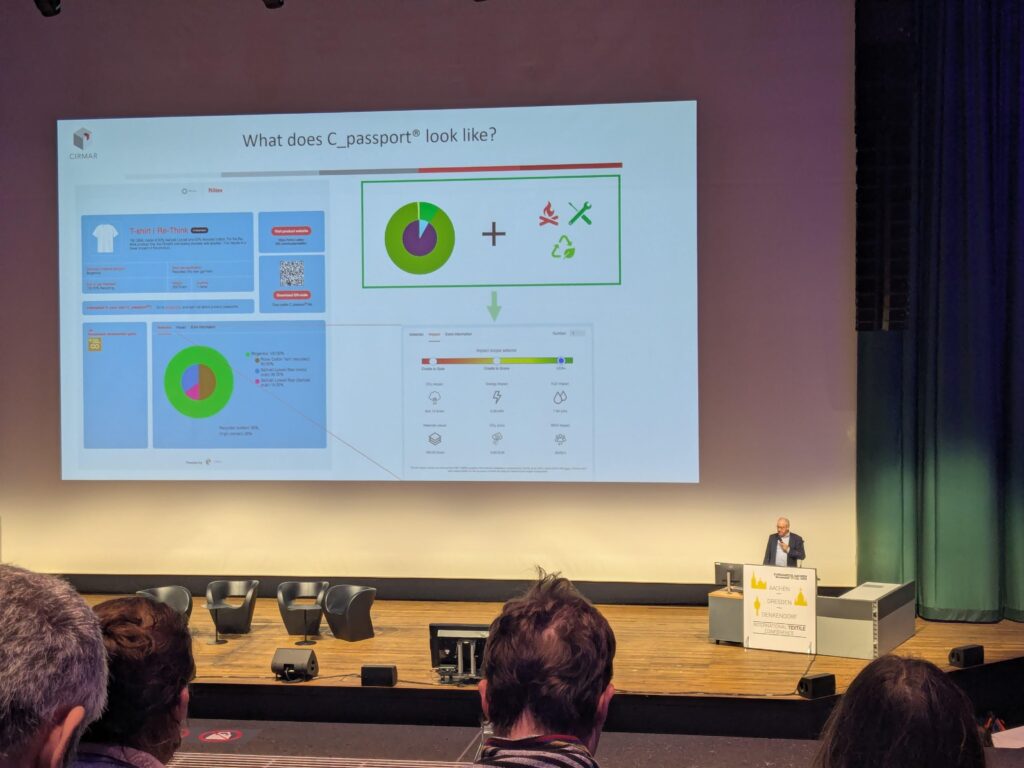
Frans spoke about C_passport® , designed to make the creation of DPPs both accessible and efficient. We help our users generate large numbers of digital passports by building on existing product data such as material composition and intended end-of-use solutions. Integrated impact calculations further support decision-making and help companies demonstrate circular performance.

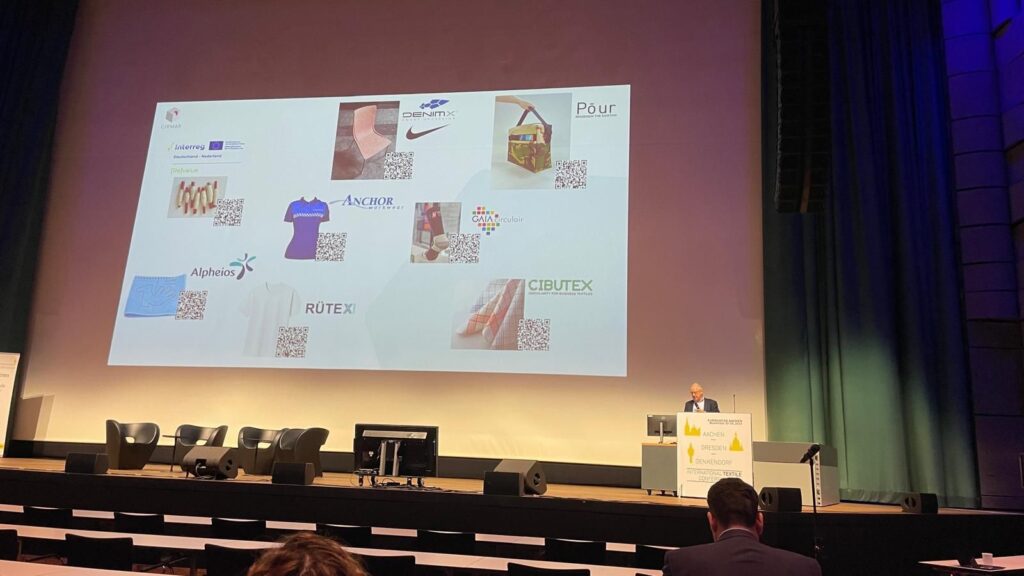
One of the examples that demonstrate this transition to more circular products is Cirmar and FBBasic’s contribution to the [Re]Value project, where the team is mapping circular opportunities for hemp-wool yarns. By calculating environmental impact across scenarios, the project shows how data-driven insights can guide the development of more sustainable textile chains.
Finally, he connected these innovations to the broader regulatory landscape. Digital product passports align seamlessly with upcoming EU requirements, including Extended Producer Responsibility (EPR) schemes and the Eco-design for Sustainable Products Regulation (ESPR). As legislation moves toward mandatory transparency, the need for scalable, reliable product data becomes unavoidable.
Frans’ message was clear: a circular textile economy is within reach—and digital product passports are the key to unlocking it.