


The transition to a circular economy relies on trustworthy, practical information about materials. This week marks the official kick-off for project Reïnkarneer: an collaboration subsidised by the EU (JTF) that aims to develop a common language for recycled content. The project starts with plastics, but explicitly looks to translate the approach to other material groups.
Recycled materials play an increasingly important role in European industry, but their application lags behind the ambitions. Not because of a lack of motivation, but because of a structural problem: not enough clear information.
Companies face a variety of challenges:
Without a common understanding about characterisation and naming for recycled content, reuse remains complex, risky and often economically unviable to scale.
Reïnkarneer aims to make the application of recycled content easier, more reliable and competitive. We do so by developing:
Deze digital product passports acts as a dynamic information carrier in which properties, origins and application areas of materials are recorded transparently.
Even though the initial focus will be recycled plastics, the ambition reaches further. Reïnkarneer aims to raise the volumes of recycled content in:
By creating one recognisable system, the conditions arise to scale recycled content across industries. This makes it much easier for producers, recyclers and designers to apply recycled materials more often and in larger volumes.
Reïnkarneer runs from 2025 to 2027. During these two years, we combine various approaches
The practical approach is crucial. By working with recognisable examples from frontrunners, other companies and knowledge institutes can not only understand what the new language is, but also how they can leverage it themselves to improve their own processes.

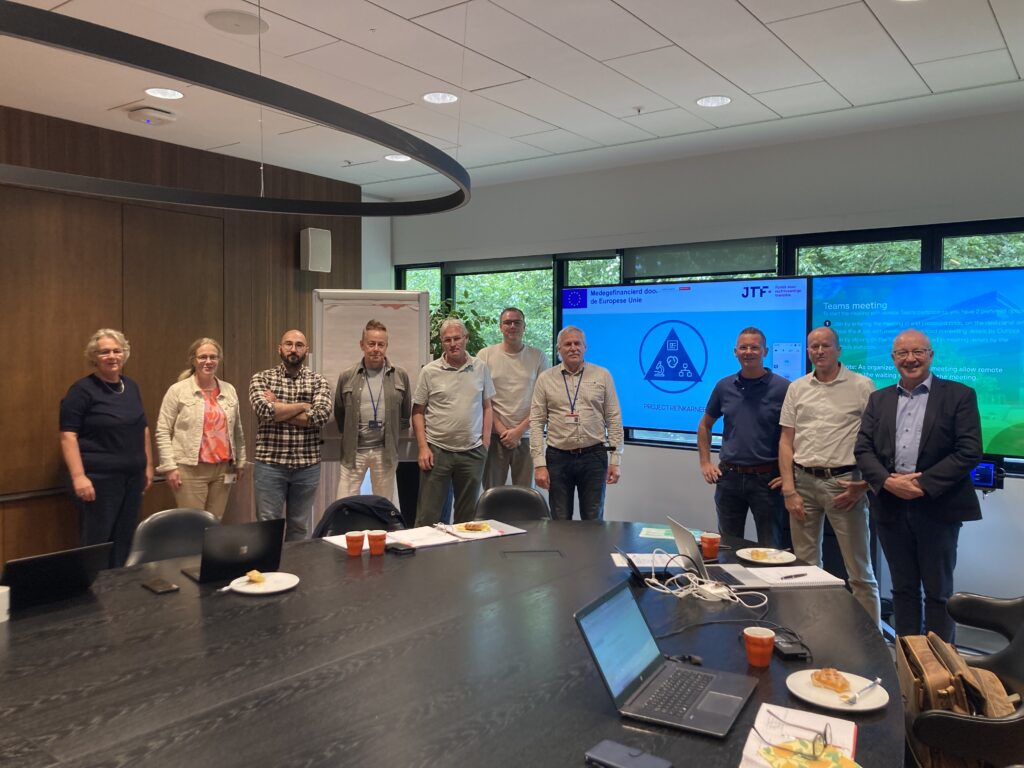
Reïnkarneer is a collaborative project in which industry, knowledge institutes and authorities strengthen each other. The official kick-off this week took place at Brightlands Chemelot, together with Stimulus, marking the official start of the project.
De upcoming period we will be sharing updates on:
That is how we build a broadly accepted system that contributes to the transition to a circular economy.
The development of a common language for recycled content is not a theoretical exercise, but a crucial step towards large-scale reuse. Through transparency, standardisation and collaboration, recycled content can fulfil its potential.
Keep a close watch on our channels and make sure you do not miss out on any updates. Do you want to participate in workshops and webinars? You are very welcome to take part in Reïnkarneer.