


One of the most important questions in any circular strategy is: What can this material become next? Circularity isn’t achieved through ambition alone—it requires a clear understanding of whether recovered materials can be used again, in what quality, and under what conditions. At the same time, recycling facilities often need scale and a homogeneous and continuous input. This is where feedstock research becomes essential.
At Cirmar, we conduct hands-on research into the feasibility of recycling routes, the availability of necessary and to be pretreated input volume, and the practical options for using recovered resources in new products. Our work helps companies understand not only the technical potential of a material, but also the commercial reality of sourcing, processing and applying it within the circular cascade.
Because we work closely with both sides of the market—those who need circular feedstock and those who produce it—we are uniquely positioned to bridge the gap between material recovery and material reapplication.
Recovered materials often come with unknown variables: quality variations, contamination levels, mixed compositions or missing documentation. These uncertainties make it difficult for manufacturers to commit to recycled content or alternative feedstock without further insight.
Our feedstock research approach starts where the materials are—whether at recycling facilities, sorting lines, take-back systems or manufacturers that collect their own returns. By working directly with the physical material, we help identify its physical and chemical characteristics, limitations and opportunities. This includes exploring whether the material is suitable for mechanical recycling, chemical recycling or another recovery method, and what level of quality can realistically be achieved. As we are part of COAST – community of innovation, we have access to an extensive network of organisations that have expertise in characterisation, as well as knowledge institutes, allowing us to deliver the best possible advice.
The goal is to replace assumptions with evidence, making circular design and procurement decisions more reliable.
Many manufacturers want to integrate recycled content into their products but face uncertainty about availability, consistency or performance. Feedstock research helps remove those barriers. By mapping the flow of recovered materials and evaluating their usability, we can determine whether a stable supply is possible and how it aligns with technical and regulatory requirements.
Because we understand both the production side and the recycling side, we can also help companies build relationships that ensure the material loop remains stable. This allows product designers, engineers and procurement teams to commit to circular feedstock with confidence rather than hesitation.
Circularity is not only about identifying one recycling solution—it is about understanding the best possible use for a material at the right time in its use cycle. Sometimes the highest-value solution is mechanical recycling. In other cases, chemical recycling, regranulation, downcycling or repurposing may be more feasible. And in some situations, materials can cycle through several stages over time.
Feedstock research helps companies understand this full cascade. Instead of theoretical flows, we provide insight into real-world pathways: what is possible, who can process the material, what quality can be expected, and how the output aligns with product requirements. This creates a solid foundation for long-term circular strategies.
One of Cirmar’s strengths is our extensive network across collection schemes, recycling partners, logistics providers, material processors, knowledge institutes and manufacturers. Because we understand the needs and constraints on both sides of the market, we can match supply with demand in a way that is practical and mutually beneficial.
This often means working with recyclers who can process materials to the required specifications, while simultaneously helping manufacturers adapt their designs or processes to accommodate circular feedstock. The outcome is a smoother, more predictable circular flow—something that is often impossible without the right connections and insights.
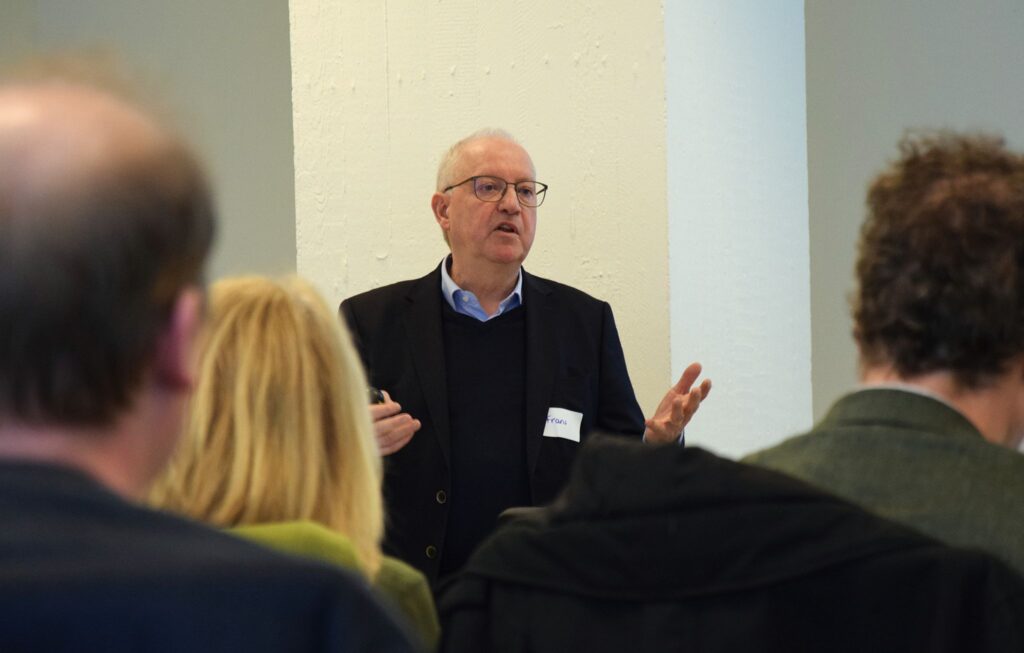
“Circularity is a systems challenge – finding and connecting feedstock for next use applications of material is how we solve that challenge. In doing so, you can recover quality and value!”
Frans Beckers
Feedstock research also integrates naturally with Digital Product Passports (DPPs). By improving data on material composition and performance, we help ensure that recyclers and manufacturers have the information they need to process materials effectively. Conversely, data generated during feedstock research can be incorporated into passports, improving traceability and supporting circular design choices.
In this way, feedstock research does more than identify material potential—it strengthens the information architecture that circularity depends on.
For circularity to succeed, companies need reliable answers about their materials. Feedstock research provides those answers. With hands-on material analysis, close collaboration across the market and realistic evaluation of opportunities, Cirmar helps organisations make informed decisions that lead to real circular progress.
Whether you’re exploring recycled content, evaluating next-use options or designing products with circular feedstock in mind, we turn complex material questions into actionable solutions.
Our experts in feedstock research are ready to transform your business.
Find out more about our circular transformations by diving into our circular stories