


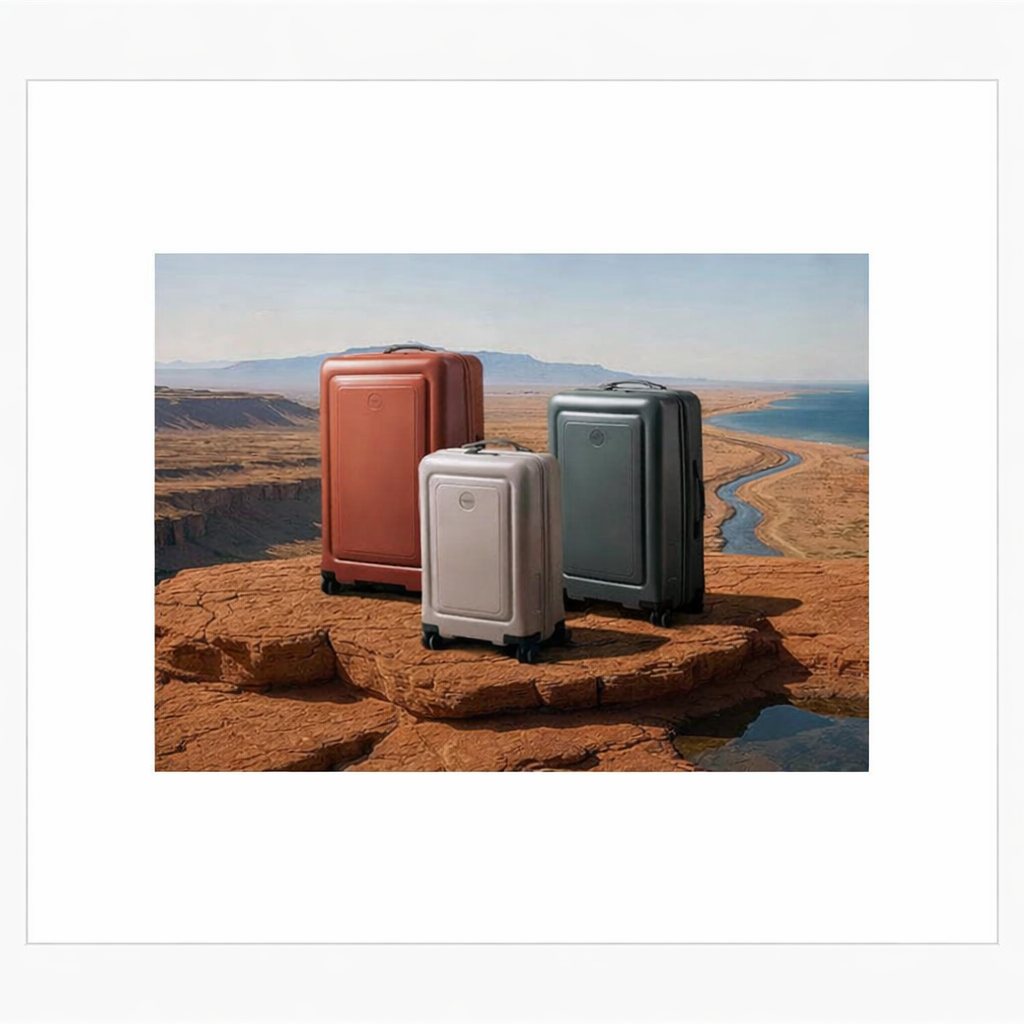
Princess Traveller believes the world is too beautiful not to explore — and that exploration comes with responsibility. Sustainability is a guiding principle across how the brand designs, produces, and extends the life of its suitcases, from using sustainable materials and preventing ocean waste to designing products that are easy to repair and recycle. The journey began in 2021 with suitcases made from recycled PET bottles and has since expanded to include materials such as Ocean Bound Plastic, including recovered fishing nets, ropes, and mismanaged plastic waste. Looking ahead, Princess Traveller has set a clear ambition: by 2030, the brand aims to make 100% of its suitcases from sustainable materials. While acknowledging that sustainability is an ongoing process, the brand stands out through a deliberate and transparent approach — making conscious choices driven by long-term impact rather than trends.
In close collaboration with Princess Traveller, Cirmar translated these ambitions into a concrete digital foundation for circularity. By developing Digital Product Passports for their products, we enabled transparency across the full use cycle of each suitcase — from material origin to future use. These passports connect seamlessly with existing product identification standards, ensuring consistency and scalability, while making complex impact data accessible and actionable. By visualising material composition and embedding forward-looking guidance on repair, reuse, and next use, the Digital Product Passports support informed decisions at every stage of the product’s life. This approach allows Princess Traveller to not only measure and communicate impact, but to actively design for circularity — turning sustainability goals into practical, traceable action.
A better next-use solution has a measurable impact when it is designed into the product from the start and supported by data. For Princess Traveller, Cirmar made this impact visible by modelling the combined effect of using recycled materials and ensuring that products can be recycled again after use. Within C_dashboard®, these scenarios were analysed and compared in a circular context, showing how design choices influence long-term impact rather than just first use. Because C_dashboard® is continuously connected to C_passport®, Princess Traveller can compare products side by side and view the cumulative impact across an entire collection. This creates a clear, actionable understanding of how improved next-use strategies strengthen circular performance at both product and portfolio level.
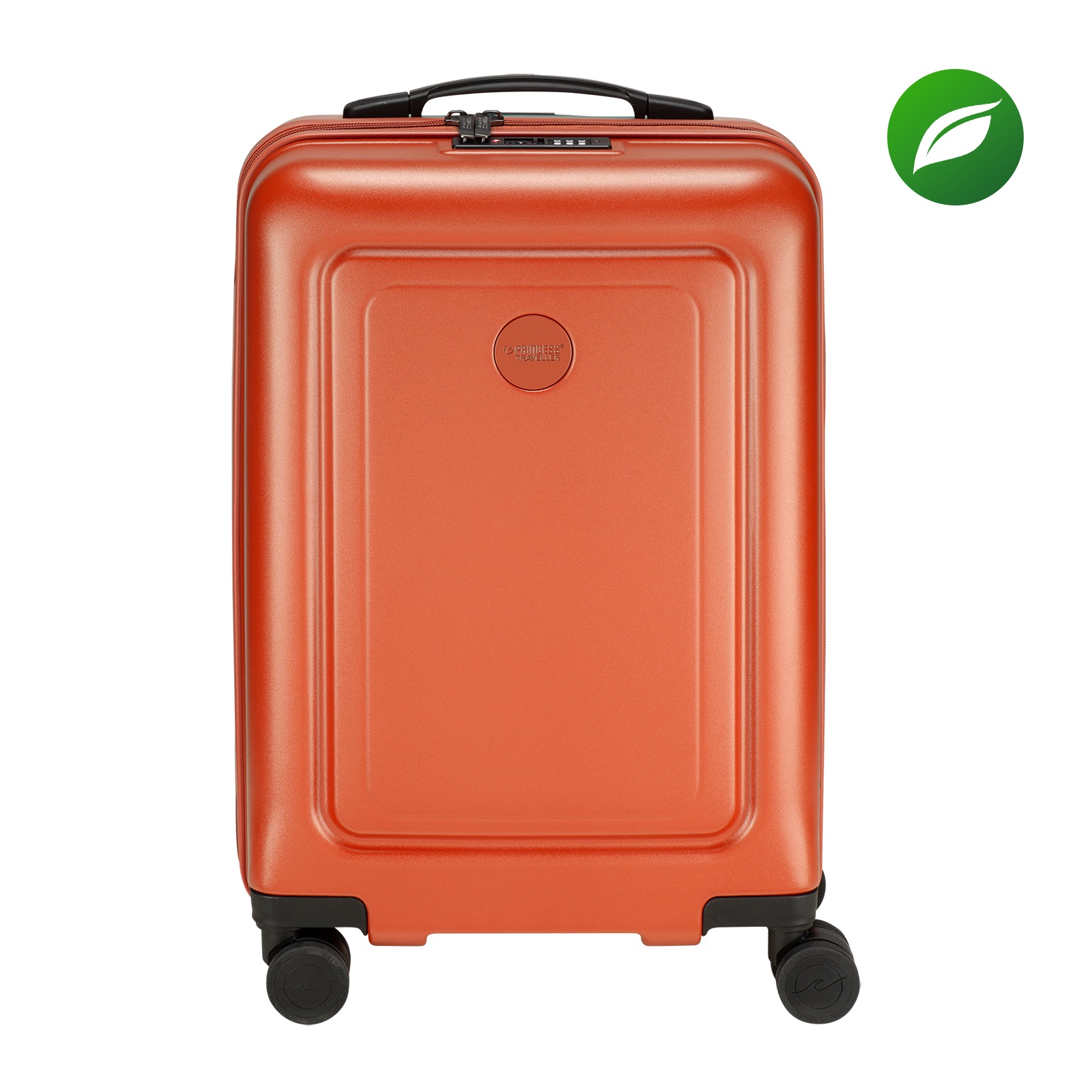
From our perspective working closely with Princess Traveller, what sets their approach apart is the combination of thoughtful material choices, purposeful design, and rigorous supply-chain transparency. The PT-Elements collection is built around recycled and traceable inputs — hard shells made from GRS-certified recycled polycarbonate, linings and zippers from post-consumer PET bottles, and structural components like handles, wheels, and trolley systems derived from Ocean Bound Plastic such as discarded fishing nets and ropes. These materials are selected not just for sustainability, but also for durability and performance, ensuring the suitcases remain strong, lightweight, and functional over many years.
The products are designed for longevity with modular parts that are easily repairable via QR-linked replacement components, and every step of sourcing and production is independently certified, including environmental and social standards through frameworks like the Global Recycled Standard (GRS) and amfori BSCI. Princess Traveller complements material innovation with responsible packaging — entirely plastic-free and FSC certified — and an ongoing commitment to meaningful impact, such as supporting ocean-health initiatives with contributions tied to sales.