


Understanding environmental impact is essential for any organisation transitioning toward circularity. Yet footprint assessments are often slow, complex, and expensive—especially when looking at the detailed realities of products. At Cirmar, we focus primarily on product footprinting, because this is where most of a company’s environmental impact originates. By analysing products directly, we uncover the insights needed to improve design, optimise material flows, and accelerate circular business models.
We also support organisations in determining their company-wide footprint. While this provides a useful high-level picture, our strength lies in revealing the underlying hotspots and advising businesses on where their efforts will make the greatest difference. The result is a practical and strategic understanding of impact across the value cycle.
Most of a company’s environmental impact is tied to the materials, processes, and decisions behind its products. Product-level footprinting provides clarity on which components drive emissions, where resources are being lost, and how design and use cycle choices influence overall performance. With this information, companies can make more informed decisions about product development, procurement, repair, reuse, recovery, and end-of-use strategy.
By focusing on the product level, footprinting becomes a powerful tool for building more circular business models. The insights gained translate directly into opportunities for cost savings, material efficiency, and value retention.
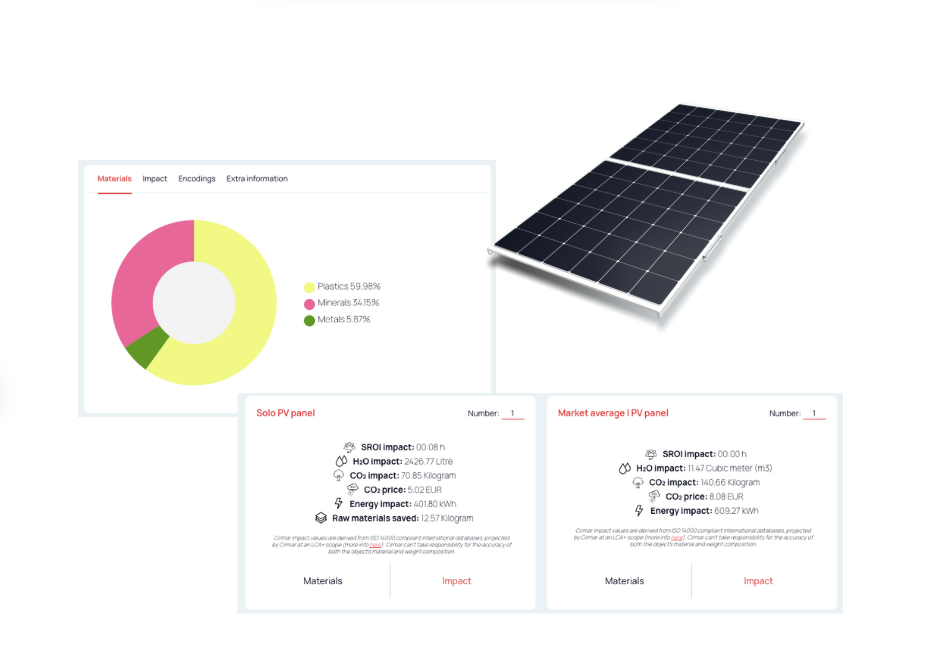
Although our specialisation lies in products, we do support organisations in mapping their broader company footprint. Here the objective is not simply to produce a number, but to help teams understand what drives their impact and where change will be most effective. We bring clarity to complex datasets, highlight the most relevant hotspots, and guide companies in connecting footprint results to concrete improvements across operations, supply cycles, and product portfolios.
Traditional LCAs, while valuable, often take months to complete and require extensive manual work. Cirmar follows ISO standards for impact calculations, but we have developed a more efficient methodology that dramatically speeds up the process. By structuring product information digitally and using consistent calculation frameworks, we can produce reliable results far more quickly than conventional LCA approaches allow.
This efficiency makes it possible for organisations to analyse multiple products, compare variants, and evaluate design choices without getting stuck in expensive, slow-moving assessments. Impact data becomes accessible, repeatable, and scalable—exactly as it should be.

Traditional LCAs measure environmental impact but overlook one crucial element: circularity. To address this gap, we developed LCA+, an expanded methodology that adds circular impact to the equation. It captures how effectively materials remain in circulation, how much value is retained at the end of use, and how design choices influence reuse, refurbishment, and recycling.

With LCA+, companies gain a more complete picture of product performance—one that reflects both environmental footprint and the circular potential embedded in their products. This dual perspective is essential for organisations that want to understand not only how they impact the world, but also how they help close the loop.
“We can express the true impact of circular products. Applying the same, circular impact calculation scope makes the positive effects of going circular obvious. We enable quick, meaningful insights with footprinting.”
Frans Beckers
Footprint insights become even more powerful when connected directly to products. With Digital Product Passports, companies can embed reliable impact information into product documentation, giving stakeholders transparent, accessible, and verifiable data. This supports upcoming regulatory requirements, strengthens customer trust, and makes sustainability claims more credible.
By integrating footprint data—both environmental and circular—into C_passport®, organisations create a foundation for more informed decision-making across the entire lifecycle of their products.

Footprinting is only meaningful when it leads to real change. Cirmar helps companies translate results into practical improvements, whether that means redesigning products and their compositions, adjusting material sourcing, improving recovery processes, or rethinking business models. With the right insights, organisations can move confidently toward more circular and more sustainable operations.
Our experts in circular strategies are ready to transform your business.
Find out more about our circular transformations by diving into our circular stories.